

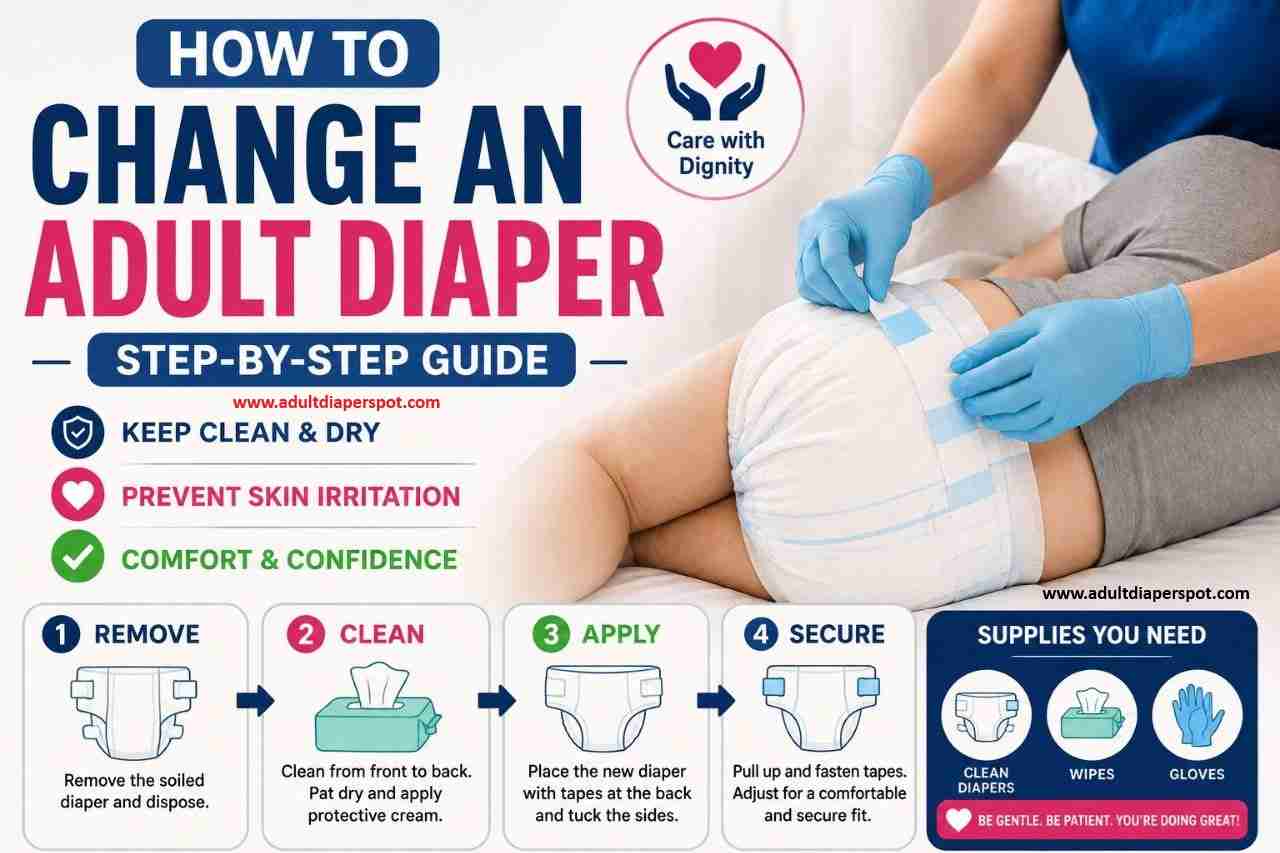
How to Change an Adult Diaper: A Simple Step-by-Step Guide for Caregivers – Caring for an elderly, bedridden, or mobility-limited loved one can involve several daily tasks, including changing adult diapers. Although it may seem difficult at first, following a consistent and gentle routine can make the process easier and more comfortable for both the caregiver and the person receiving care.
How to Change an Adult Diaper: A Simple Step-by-Step Guide for Caregivers
This guide explains the basic steps involved in changing an adult diaper, along with important hygiene and comfort tips.
When Should an Adult Diaper Be Changed?
An adult diaper should be changed whenever it is soiled with feces or urine and should not be left on for unnecessarily long periods.
As a general guideline, diapers may need changing every 4–6 hours, but the timing can vary depending on the person’s needs, the amount of urine or stool, the type of diaper, and the individual’s care plan.
A soiled diaper should be changed promptly to help keep the skin clean and reduce the risk of irritation.
Supplies You Will Need
Before beginning, keep everything you need within easy reach.
You may need:
* A clean adult diaper
* Disposable gloves
* Wet wipes or a clean, damp cloth
* A towel or disposable underpad
* Skin-protective cream or barrier cream, if recommended
* A disposal bag
Preparing the supplies beforehand means you won’t have to leave the person unattended during the process.
Step 1: Prepare the Person and the Area
Explain what you are going to do before starting.
Provide as much privacy as possible and make sure the room is comfortable.
If the person is able to help, encourage them to participate in whatever way they safely can.
Place an absorbent pad underneath the person if necessary to protect the bed or other surface.
Wash your hands and put on disposable gloves.
Step 2: Remove the Soiled Diaper
Carefully loosen the tapes or fasteners on the used diaper.
Roll the soiled portion inward as you remove it to help contain the waste.
Avoid pulling or moving the person unnecessarily, particularly if they have limited mobility or pain.
Place the used diaper directly into a disposal bag.
Remove the gloves and dispose of them appropriately if they are soiled.
Wash or sanitize your hands before putting on a fresh pair of gloves.
Step 3: Clean the Skin Thoroughly
Put on clean gloves before cleaning.
Gently clean the person’s skin using wipes or a soft, damp cloth.
For people with female anatomy, cleaning from front to back is particularly important because it helps reduce the transfer of bacteria toward the urinary tract.
Be gentle around sensitive areas and avoid excessive rubbing.
Pay particular attention to skin folds and areas that may remain moist.
After cleaning, gently pat the skin dry.
Why Is Keeping the Skin Dry Important?
Prolonged exposure to moisture can contribute to skin irritation and discomfort.
Keeping the area clean and dry helps protect the skin.
If a healthcare professional has recommended a barrier or zinc-based cream, apply it according to their instructions.
Step 4: Position the Clean Diaper
Open the clean diaper and position it correctly.
For many taped adult diapers, the section with the fastening tapes is positioned toward the back.
If the person can safely turn onto their side, gently help them turn while supporting them appropriately.
Slide the diaper underneath them and ensure it is centered.
Avoid leaving wrinkles or folds against the skin.
Step 5: Secure the Diaper
Gently bring the front portion of the diaper into position.
Pull it up comfortably between the legs without making it excessively tight.
Fasten the tapes or tabs according to the diaper manufacturer’s instructions.
The diaper should be secure but comfortable.
Check around the waist and legs to make sure the fit is not excessively tight and that there are no uncomfortable folds.
Step 6: Check the Final Fit
Once the diaper is secured, make sure the person is comfortable.
Check that:
* The diaper is positioned correctly
* The leg openings are not excessively tight
* There are no major folds against the skin
* The person is lying or sitting comfortably
* Clothing and bedding are arranged properly
Dispose of the used materials appropriately and wash your hands thoroughly after finishing.
Important Skin-Care Tips
Regular diaper changes are only one part of preventing skin problems.
Caregivers should also:
* Keep the skin clean and dry
* Avoid vigorous rubbing
* Change wet or soiled diapers promptly
* Check regularly for redness or irritation
* Use a recommended barrier cream when appropriate
* Keep bedding and clothing clean and dry
If you notice persistent redness, sores, swelling, unusual discharge, significant pain, or other concerning changes, contact a healthcare professional.
Make the Process Comfortable and Respectful
Adult diaper changes can feel embarrassing or uncomfortable for the person receiving care.
Treat the person with dignity throughout the process.
Explain what you are doing, maintain privacy, and avoid rushing unnecessarily. Cover areas of the body that do not need to be exposed.
Remember that the person receiving care is not simply a patient—they are an individual who deserves patience, respect, and reassurance.
Final Thoughts
Changing an adult diaper becomes easier when caregivers follow the same basic routine each time.
Prepare the supplies first, remove the used diaper carefully, clean the skin gently from front to back where appropriate, make sure the skin is completely dry, apply any recommended protective cream, and position the new diaper comfortably.
Most importantly, focus on cleanliness, skin protection, safety, comfort, and dignity.
If you are caring for someone with limited mobility or a medical condition, ask their healthcare professional or trained caregiver to demonstrate the safest positioning and changing technique for their specific needs.


One thought on “How to Change an Adult Diaper: A Simple Step-by-Step Guide for Caregivers”